
Introducing Our First Rum
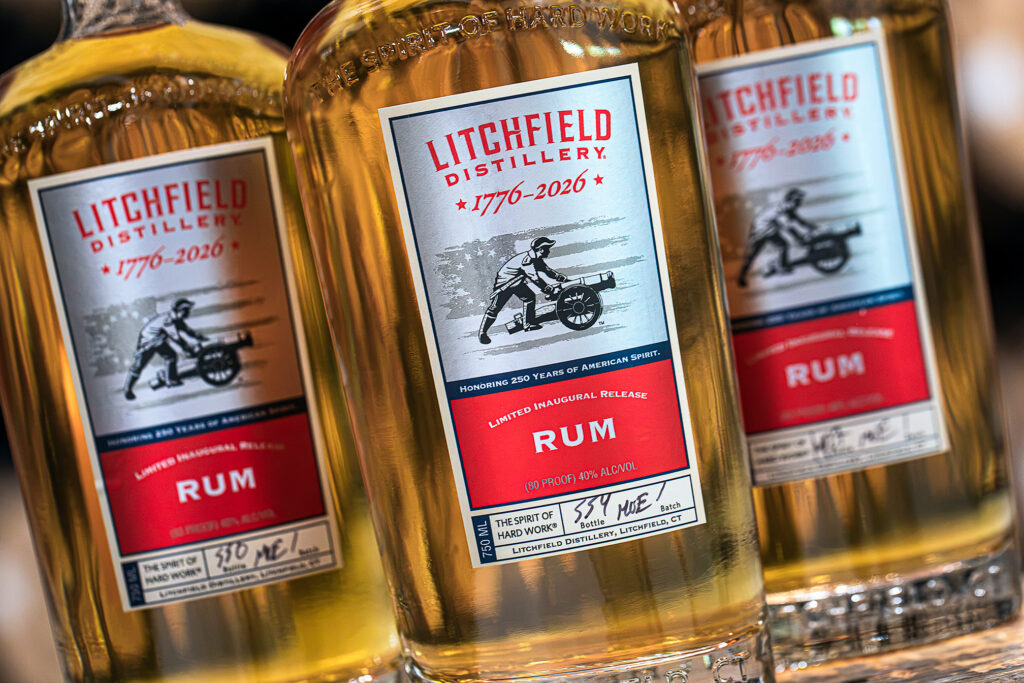
As America celebrates the 250th anniversary of the Declaration of Independence, Litchfield Distillery is continuing to explore the people, products and events that helped shape our country and our home state. That exploration has led to a spirit with deep roots in Connecticut’s maritime history.
Introducing Litchfield Distillery Rum, our first rum and the latest limited release to carry our commemorative 1776–2026 label design.
Distilled from American-grown sugar cane molasses and aged in the same barrels we employ for our award-winning bourbons, this inaugural release connects an important part of Connecticut’s past into the present. It was produced with the same hard-working approach that defines everything we make.
Connecticut’s Connection to Rum
Long before Connecticut became known for manufacturing, its rivers and shoreline connected local farmers, merchants and craftspeople to a much larger Atlantic economy.
One early milestone came in 1649, when merchants from Wethersfield and Hartford invested in a small vessel called the Tryall. The ship departed the Connecticut River carrying farm produce, lumber and barrel staves for Barbados. That voyage helped establish a trading relationship between Connecticut and the West Indies that would grow substantially over the following century.1
Connecticut supplied the Caribbean islands with livestock, food, lumber and other necessities. Returning vessels brought sugar, molasses, rum, salt, fruit and coffee. Merchants in Hartford, Middletown, New London, Norwich and New Haven helped keep this commerce moving between local communities and ports throughout the Atlantic.1
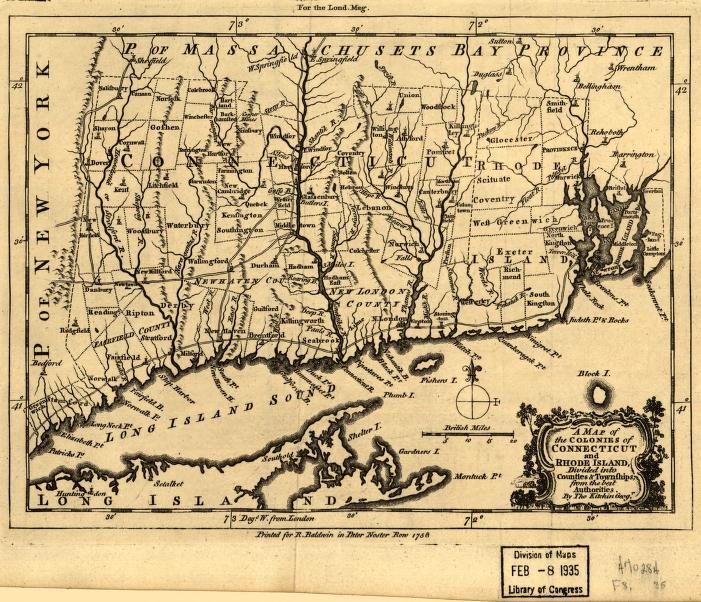
A 1758 map of Connecticut and Rhode Island, showing the colony’s shoreline, rivers and communities during the era of the West Indies trade. Library of Congress, Geography and Map Division.
Rum and the Road to Independence
By the middle of the 18th century, molasses was essential to New England’s rum industry. The trade was valuable enough that Britain’s attempts to regulate and tax it became an early source of conflict between Parliament and the colonies.
On April 5, 1764, Parliament enacted the Sugar Act. Although the law reduced the official duty on foreign molasses, it called for much stricter enforcement, imposed new controls on colonial shipping and prohibited the importation of foreign rum. These provisions had a significant impact on New England, where distilling sugar and molasses into rum had become a major industry.2
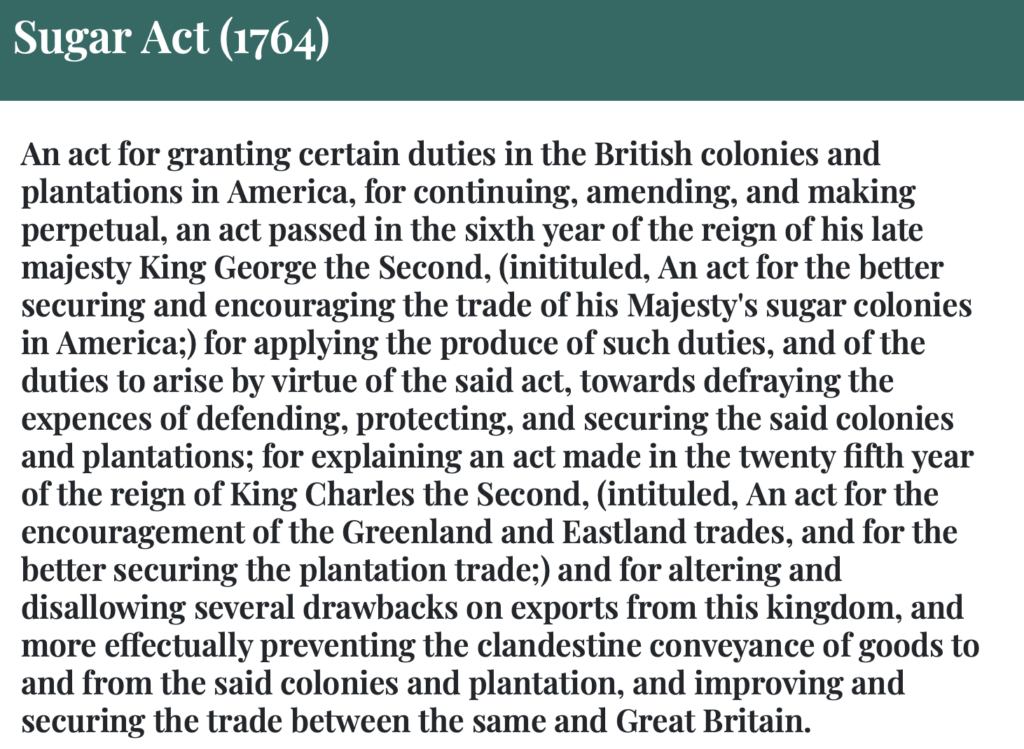
The opening of the Sugar Act of 1764, formally cited as 4 Geo. III, chapter 15. The act placed new duties and enforcement measures on colonial commerce, including molasses and rum. Great Britain, Parliament, reproduced in Danby Pickering’s The Statutes at Large, 1765.
Resistance to the Sugar Act helped raise larger questions about taxation, representation and the rights of the colonies. Those questions would become increasingly urgent during the 12 years leading to the Declaration of Independence.
“Rum has an interesting connection to Connecticut and to the events that led to American independence,” said Peter Baker of Litchfield Distillery. “That made it a natural spirit for us to explore as part of our 250th commemorative releases.”
Made with American-Grown Molasses
Litchfield Distillery Rum begins with American-grown sugar cane molasses sourced from Buffalo Molasses, a family-owned and operated company based in western New York. Buffalo Molasses supplies non-GMO sugar cane molasses grown in the United States specifically for rum production.
The molasses is fermented and distilled at Litchfield Distillery, then aged in the same barrels we use for our whiskeys. This rum rested for a little over one year, drawing additional flavor and character from the oak before being bottled at 80 proof.
The result honors rum’s traditional sugar cane foundation while reflecting the barrel-aging experience LD has developed through more than a decade of producing award-winning whiskey.
A Passion Project
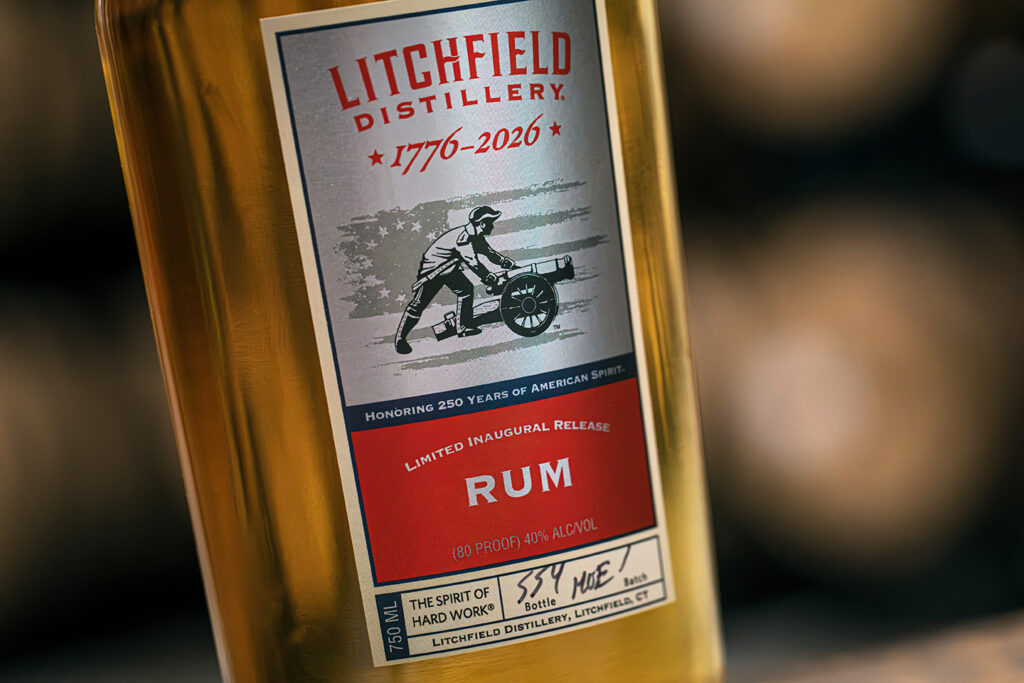
The pursuit Litchfield Distillery’s first rum originated with Litchfield Distillery employee Mike Eyre. Mike researched how rum could be successfully produced at the distillery, helped develop the production method and remained closely involved throughout the process.
“This rum would not have happened without Mike,” said Peter. “He came to us with a plan, did the research and stayed closely involved throughout the entire process. Mike believed in the project from the beginning, and his passion and attention to detail played a huge role in the quality of the finished rum.”
We felt it appropriate that Mike should have the honor of numbering and signing every bottle of this batch 1 release.
Rum Tasting Notes:
Nose: you’ll experience welcoming notes of caramelized sugar and ripe banana, followed by light molasses and a hint of tobacco and/or leather.
Palate: Notes of brown sugar, vanilla and baking spice with hints of dried fruits.
Finish: Clean and smooth, with lingering notes of vanilla, raisin and lightly toasted oak.
A Limited Inaugural Release
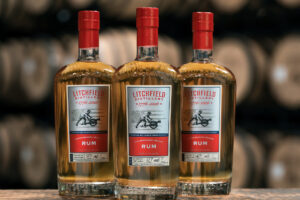 This first bottling of Litchfield Distillery Rum is being offered as a limited inaugural release featuring our commemorative 250th anniversary label.
While this initial release is limited, it may not be the end of the story. We will be listening closely to customer feedback and evaluating whether a similar rum should earn an ongoing place in the distillery’s portfolio.
Litchfield Distillery Rum is available at the Litchfield Distillery Store and participating retailers throughout Connecticut. It has a suggested retail price of $34.95.
We invite you to experience our first rum and raise a glass to 250 years of American history, Connecticut’s hard-working heritage and a new chapter in The Spirit of Hard Work®.
Sources:
[1]: https://connecticuthistory.org/connecticut-and-the-west-indies-trade/ “Connecticut and the West Indies: Sugar Spurs Trans-Atlantic Trade – Connecticut History | a CTHumanities Project”
[2]: https://www.nps.gov/articles/000/sugar-and-stamp-acts.htm “Britain Begins Taxing the Colonies: The Sugar & Stamp Acts (U.S. National Park Service)
RELATED POST: